

If flow is your state of peak performance, where you feel your best and perform your best, burnout is undoubtedly on the opposite end of the spectrum. Burnout impacts your energy, motivation, innovation, and emotional well-being. The cumulative effect this has on businesses that rely on employees who are heading towards burnout is significant.
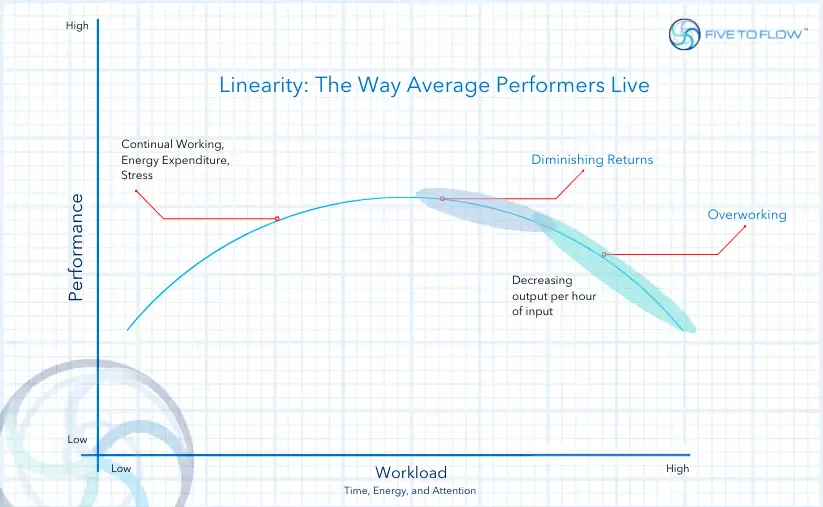
In 2019, the World Health Organization estimated that anxiety and depression cost the global economy one trillion dollars per year in lost productivity. Lower productivity, higher absenteeism, higher turnover, and increased healthcare costs are just a few of the way the effects of burnout can be measured. A separate study found that workplace stress is estimated to cost the U.S. economy alone more than 500 billion dollars per year. Notably, this was all before the pandemic and the great resignation. Even if the world returns to normal, burnout is a massive problem that is only getting worse. Burnout, exhaustion, and disengagement all describe the same phenomena: a workforce that is increasingly unable to cope with the stressors placed on them by their work environment. Did something change in the work environment? Did the people that work in that environment change? There are some clear paths that can be taken on both fronts that will lead to better outcomes for individuals and the companies they work for.
“Burnout is a syndrome conceptualized as resulting from chronic workplace stress that has not been successfully managed,” as stated in the WHO’s classification of burnout. When you experience burnout, you typically experience some level of exhaustion, cynicism, or disengagement from your job, and usually have feelings of inefficacy or lack of competence. Naz Beheshti at Forbes states that each element of burnout feeds into the others. It is difficult to be engaged when we are exhausted. Exhaustion undermines effectiveness, which in turn hurts our morale. Some people may have only one of the three main traits of burnout as their dominant experience, while others may be overwhelmed and experience all three. There are a lot of variables that feed into the individual experience but, in general, these three traits are red flags to look out for.
Dr. Christina Maslach, the world’s foremost expert on burnout, has consolidated the potential triggers for burnout into six key areas:
“Categorizing burnout as a disease was an attempt by the WHO to provide definitions for what is wrong with people, instead of what is wrong with companies,” states Maslach. There are things you can do to manage stress and become more resilient to it like Mindfulness-Based Stress Reduction. Nevertheless, organizations that focus on giving their employees the space to manage their work/life balance have a greater probability of maintaining an engaged and productive workforce. A recent article from Forbes reinforces the idea that organizations benefit from staying ahead of the burnout curve and “gain a distinct advantage over their competitors. Not only will employees be healthier and happier, but they will produce more, deliver better service to customers and clients, and reduce absenteeism.”
Stress elicits the same hormonal response from our body whether it’s perceptible or not and whether it’s physical or psychological in origin. Cortisol and adrenaline are released, raising blood pressure and heart rate and sending us into a “flight or fight” response. Humans are designed this way for survival, but when triggered chronically by modern stress it can cause health issues and lower cognitive abilities. According to the Mayo Clinic, the long-term activation of the stress response system and the overexposure to cortisol and other stress hormones that follow can disrupt almost all of your body’s processes. This puts you at increased risk of many health problems.
In a Harvard Business Review article, an executive experiencing burnout shared that his feelings were muted so he could deal with the emotional pain of life. In order to sustain performance at a high level, many executives confess that they experience burnout. Thankfully, there are some simple interventions that help improve your mental health, physical health, and work performance.
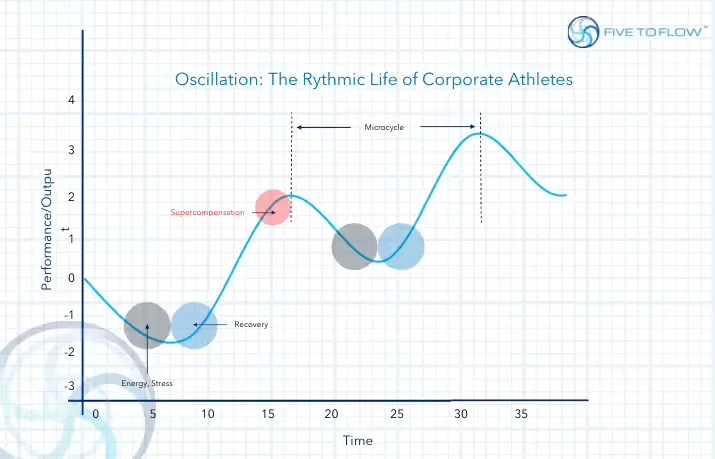
One option is a concept called “oscillation.” Using high-level athletics as a model, athletes work hard, recover, gain an adaptation while recovering, and then work hard again. This type of oscillation between working hard and resting or adapting is not the paradigm for high-level business executives, but maybe it could help. This is precisely how the flow cycle works with its four phases. The struggle phase is a “work hard” phase, followed by the release phase, which is a form of recovery. Then you find your flow, which doesn’t feel stressful but is highly taxing to your neurochemistry, thus requiring the final phase of recovery. Even if you tap into flow regularly, you will burn out eventually if there isn’t adequate recovery.
Now that you understand burnout on a deeper level and the negative impacts on your personal and professional well-being, what’s the next step? Tune in next week for part two where I discuss individual strategies to address burnout and organizational strategies to prevent it.