
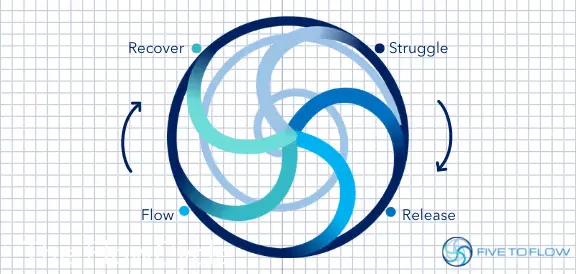
Additionally, according to Dr. Herbert Benson, nitric oxide is released, flushing out stress hormones and shifting to physiology more conducive to flow. You’ll typically feel that your lungs have opened up, and you can breathe better if you’ve successfully transitioned from struggle into release, thanks to the nitric oxide. A midday walk works great to clear your mind and prepare for a productive afternoon. Once you’ve cleared the path, you’re ready to flow.
Flow is where it all comes together. You are full of feel-good neurochemistry and all the information that has been marinating in your subconscious is ready for use. Check out our previous blog here for a more detailed look at flow.
Struggle: If you’re feeling overwhelmed, stuck, anxious, or frustrated, you’re likely in the struggle phase and could potentially benefit from: a walk outside, some gentle exercise, or something more tactile like gardening or household chores to help get your mind off of the problem.
Release: Release means not loading up on new information. Leave the phone in your pocket, turn off the TV, and when you start feeling better and breathing deeper, you’re ready to get back to your main task and perform at a high level. Finding a consistent activity that can fulfill this will be somewhat personal to your environment and schedule, so get creative if you need to.
Flow: You’re in the zone, you’re sharp, you’re motivated and crushing it. This is the reward for letting your body and mind take a step back during release, but if you want to be in the zone regularly, try not to overdo it. Scheduling distraction-free flow blocks and setting timers can help prevent you from completely draining your feel-good neurochemicals. A great way to pull yourself out of flow is to watch some tv.
Recover: You’re feeling tired, uninspired, perhaps doubting yourself and your accomplishments. This is normal; rather than bury yourself in self-destructive behaviors like eating ice cream or drinking alcohol, try some active recovery first and see if that helps. Things like a walk outside, sauna, cold showers or warm baths, yoga, meditation, massage, laughing with friends, and quality sleep are all great ways to speed up recovery and restore the neurochemistry required to feel good and perform well.
For more information about flow, please visit the Flow Genome Project. You can also follow this topic on our social channels using the hashtag #flowcabularyfriday. Each week, we focus on one term within the flow framework and how it can improve your performance at work. Please contact us for more information about Five to Flow’s solutions that increase intrinsic motivation, flow, and business health.