

Tasha Eurich, an organizational psychologist and researcher, has revealed that nearly 95% of us believe we are self-aware and only about 10% of us actually are. This gap creates inefficiencies and misunderstandings which not only lead to increased stress and burnout, but also turnover. Recent research on the Great Resignation out of MIT discovered toxic culture was the number one reason.
The good news is this level of authentic leadership is not reserved for just a few “gifted” people. All of us can cultivate these qualities through deliberate and mindful practice.
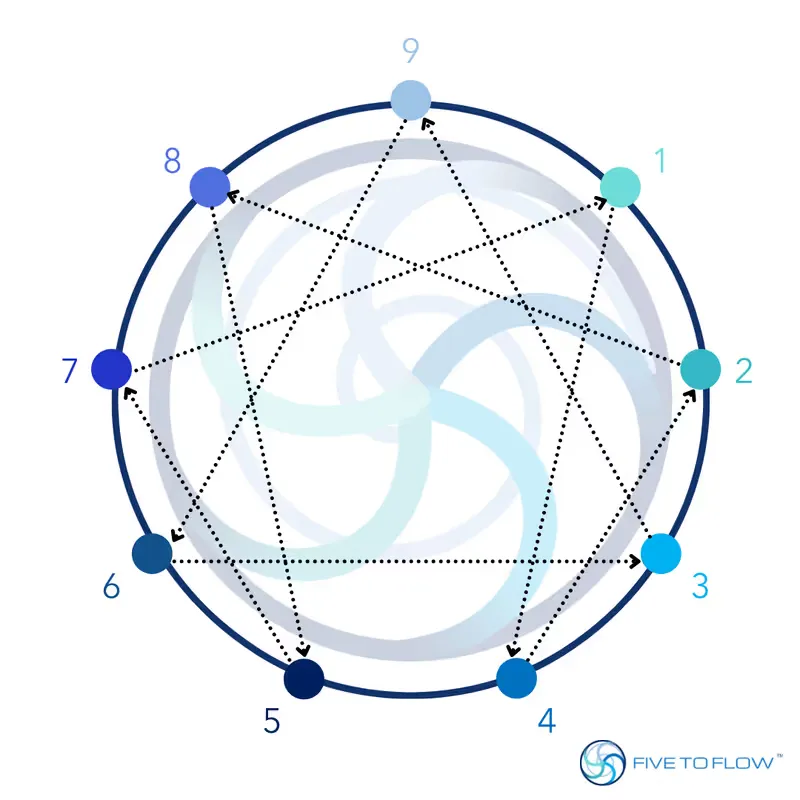
While there are many tools out there that give us feedback about our personalities, capabilities, and preferences, there is one tool that goes much deeper to help us uncover and understand our intrinsic motivations and behavior: the Enneagram. This highly insightful tool helps us understand why we think, feel, say, and do what we think, feel, say, and do.
The Enneagram is an ancient tool that has received a lot more attention over the last couple of decades. The nine numbers that surround the Enneagram circle represent personality types and symbolize our connection to one another. While we can all access different attributes of every Enneagram type, we each have one type that is dominant.
Identifying your Enneagram type can seem like a daunting task for some. Taking an Enneagram assessment is not the most accurate way to identify your type. The individual must do the work to determine his or her type. It can be helpful to take an Enneagram assessment after you have determined which type you are, but it’s not required.. If you choose to take an Enneagram assessment, we recommend The Enneagram Institute RHETI test.
Enneagram types are determined by a person’s core motivation, and each type has its own unique core motivation. Algorithms and calculations can never replace a human being’s ability to self-identify what his or her core motivation is. To determine your Enneagram type, the recommendation is to explore all of the types, read about them, access information from a variety of Enneagram master teachers, institutes, and authors, and decide for yourself which one most resonates.
It’s important to note the Enneagram is not just about your unique Enneagram type. Unlike other tools, the Enneagram is highly fluid and accounts for a variety of ways we show up in the world. For example, when a person is stressed vs feeling secure, in a healthy or unhealthy mindset, and our orientation to time and how we achieve a goal. The Enneagram gives people the ability to engage in meaningful self-discovery and self-awareness.
“Learning I’m likely a Five has helped me understand what my strengths are and how I can use those to help the team, as well as what weaknesses I should keep an eye out for and what steps I can take to manage them if and when they arise.” – Jason Haller Managing Director of Health & Wellness
“Discovering that I am a One has helped me pivot from a judging mind to a non-judging mind. By understanding my Enneagram type and how I react under stress, I have given myself the space to address developmental areas that ultimately benefit how I collaborate with members of the team.” – AJ Bellarosa Chief Marketing & Communications Officer
– Kate Visconti, Founder & CEO
Thanks to the Enneagram Institute and The Road Back To You (Cron & Stabile) for their definitions of Enneagram types.