
Over the past year and a half, the COVID-19 pandemic has had devastating impacts across the globe. Many people in the United States, especially hourly, part-time, lower-income, and gig workers, were immediately faced with concerns about their financial security and wellbeing.
But the pandemic only exacerbated the silent struggles many were facing long before. Prior to March 2020, almost a quarter of workers in the U.S. had no paid sick leave, including 42 percent of service-sector workers, 57 percent of part-time workers, and nearly 70 percent of the lowest-income earners. 47 percent of workers were living paycheck to paycheck, according to the National Endowment for Financial Education. 40 percent of adults could not cover a $400 emergency without borrowing or selling something.
We know that the stress from financial instability has a direct connection to our physical and mental health. People who struggle financially tend to have higher levels of anxiety and depression. Money remains a leading factor in attempted suicides and relationship conflict. A 2018 research study in the Journal of Financial Counseling and Planning examined the association of financial status and body mass index (BMI) and found a strong link between poor financial status and high BMI.
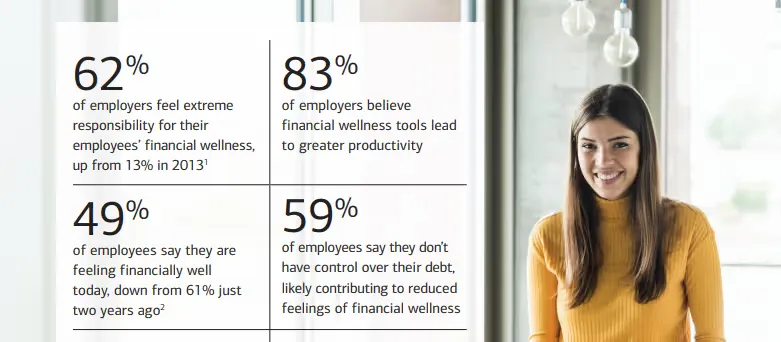
It is clear that the health of your employees directly impacts your company. A lack of productivity, focus, engagement, and retention are all significant costs to a company’s bottom line and culture. In a recent study by Bank of America, the number of employees who rate their financial wellness as good or excellent has rapidly declined over the last four years. The vast majority also reported feeling embarrassed to ask for help or uncertain of where to turn.