

In Part 1 of 10 aspects of a high-flow lifestyle, I addressed five fundamental components that help better align your routines for modern productivity. In Part 2, I’m going to continue the discussion by focusing on five more components that help you prepare mentally and physically to be your best and provide ten suggestions for creating more flow in your life.

One of flow’s biggest attributes is its ability to increase your creativity. But creativity is largely driven by pattern recognition, which means you need to have information, concepts, experiences, and memories to draw upon. If you become hyper-specialized and never have time to engage in anything outside your area of expertise, you are likely to lose some creativity as a consequence.
Meeting new people that you wouldn’t normally meet, gaining experiences that you normally wouldn’t have had, and challenging yourself in ways that make you feel uncomfortable all help contribute to how creative you can be in the future.
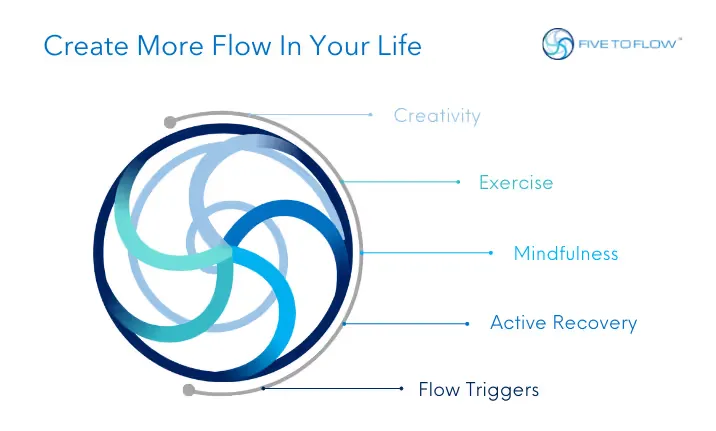
But whatever you can manage is always better than nothing at all. The benefits to physical health, brain health, and mental health that exercise provides cannot be overstated. Anyone looking to feel and perform their best in all aspects of life will make regular exercise a part of their routine.
For me, this can function as a release phase in the flow cycle. I use short breaks throughout the day to get a quick boost in mental clarity and energy before certain calendar blocks when I know I need to be sharp. My go-to choice is a 10-20 minute walk outside, preferably with some sunshine on my skin.
Charles Schwab called a version of a prioritized clear goals list one of the most valuable pieces of business advice he had ever received when he and his executives were consulted to try the Ivy Lee method back in the early 1900s. If it was good enough to help the Bethlehem Steel Company become the single largest independent steel producer in the world, then it’s probably good enough for us.
For employees in situations with extremely limited autonomy, bringing some ideas of your own to your managers along with examples of companies who have used strategies that improve autonomy successfully can potentially open the door to a conversation about the value of increased autonomy in your role.
A very recent example was that of the successful implementation of the Kaizen model being applied to hospitals amidst the initial Covid 19 outbreak. “As cases surge throughout the nation, many institutions are searching for more effective methods of improving inefficiencies in their workflow due to increasing demand and shrinking budgets,” wrote Jason Kumar, later concluding that “wait time and cost were severely decreased, while overall machine capacity and revenue were increased. Such a drastic benefit in healthcare facilities can potentially mean more lives saved.”
If you are interested in making some changes to your routines in an attempt to create less stress and more flow in your life, I understand that it can feel overwhelming at this point, and may be hard to know where to start. The best advice I have is to pick just one aspect to work on initially. Aim for something that will be easy to implement and that motivates you. This combination will have the highest likelihood of success and can act as a springboard that motivates you to adopt other habits and continue the momentum.