


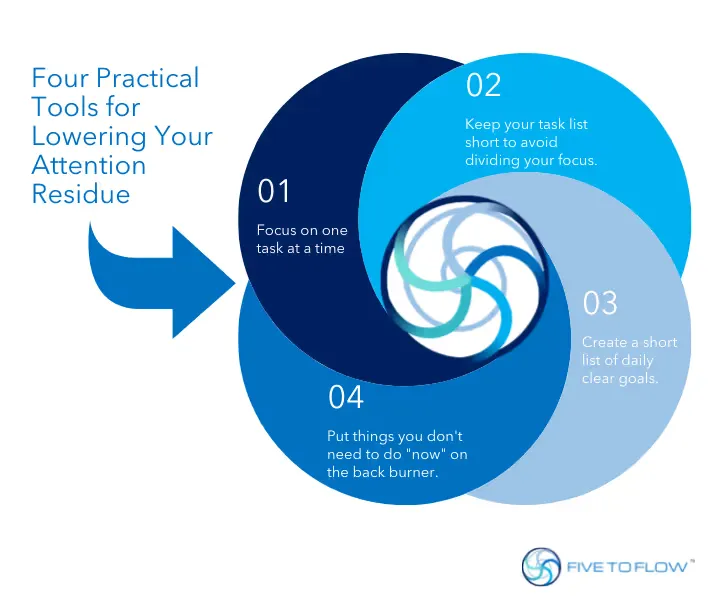
Email isn’t much better for the average worker and has been identified as the number one source of distraction in the workplace. The practice of constantly checking email throughout the day, with some studies finding an average of 36 checks per hour, is highly detrimental to our attention. This is mainly due to a concept known as attention residue, which essentially means when we split our attention, we are more easily overwhelmed, more prone to making errors, and have more difficulty making decisions. Even small shifts in attention can cause this effect to happen. So, a brief check of the inbox and a short reply may seem harmless, but in reality, you just cost yourself up to 20 minutes of attention residue and undermine peak productivity. A worker or executive who spends their entire day trying to accomplish work when constantly switching tasks or being distracted will likely never reach a flow state. They will undoubtedly, over time, develop symptoms of ADT. This style of work will feel less productive, stressful, and unsustainable.
“Continuous partial attention happens when people’s focus is continuously split. The effect is constant and intense mental exhaustion. To pay continuous partial attention is to keep a top-level item in focus and constantly scan the periphery in case something more important emerges.” - Linda Stone, former VP at Microsoft.
In his most recent book, A World Without Email, Cal Newport reminds us that we sent men to the moon without email and a computer that would be put to shame by a modern smartphone. He describes how we previously relied on systems and procedures set up for efficiency of communication, rather than how we currently use email and other administrative duties out of sheer ease and convenience.
Practical Tools
If you are interested in learning more about how Five to Flow can improve the five core elements of your organization, contact us today. For more information on flow concepts and how they improve business health, visit the Collective Voices blog for more articles.